
Weeks 1–2
Pain
Calm the injury down.
Hands-on treatment and smart load management calm the irritated tissue, starting your very first visit.
What We Treat
Watching from the sideline while your team plays the season without you: let's get you cleared and back in. It's fixable, and it starts with a cause-first evaluation, not a guess.
Sound Familiar?
Two or more? Keep reading.
Why It Happens
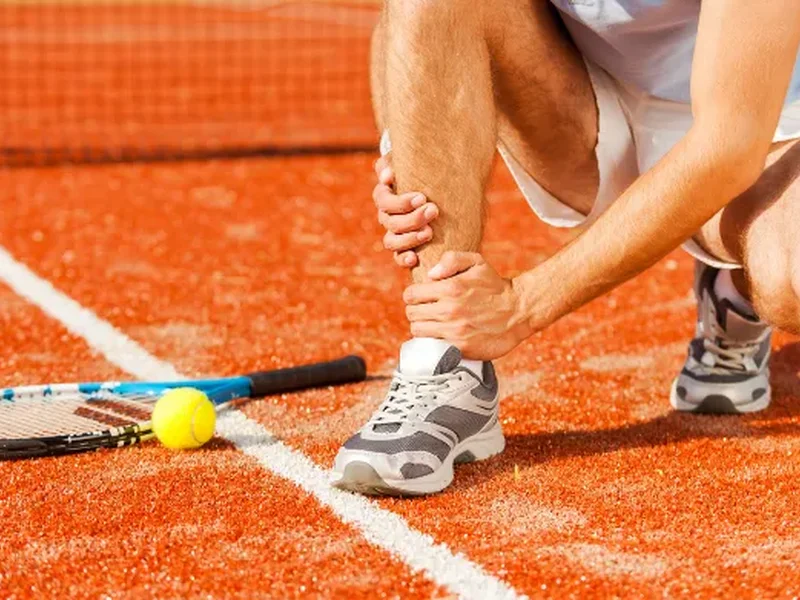
A sports injury is rarely bad luck. It's tissue, a muscle, tendon, ligament, or joint, asked to handle more than it was ready for. Sometimes that's one bad landing or collision.
More often it's the buildup: a training spike, mechanics that break down when you're tired, or getting back into play before the last injury fully healed. You're the one who plays through it. That's exactly why you're the last one to get it looked at.
It takes a real, cause-first evaluation to find what's actually driving it. Find the real cause, and the return-to-play plan gets obvious.
The Honest Truth
Nobody regrets starting too early. Every week, someone in our clinic says they regret waiting.
How We Fix It
Every plan has an endpoint. Here's what the four phases look like.
Weeks 1–2
Pain
Hands-on treatment and smart load management calm the irritated tissue, starting your very first visit.
Weeks 2–6
Prime
Targeted mobility and mechanics work corrects what actually overloaded the tissue in the first place.
Weeks 6–10
Perform
Progressive strength and power work is built around the actual demands of your sport.
Weeks 10+
Prevent
Real movement gets tested at game speed before you're cleared: that's the endpoint, not just another appointment.
Dr. Pepper, his wife, and their staff members are kind, helpful, and knowledgeable. Dr. Pepper worked patiently with me to completely cure my upper back pain. I enjoyed the friendly and casual atmosphere, the convenient location, and the ease of scheduling appointments. They will definitely be my first choice if I need more physical therapy.
Heather H. · Google review
Before: hoping a patient, knowledgeable team could actually get to the bottom of it
After: completely cured, and her first call for anything else
Questions, Answered
Usually not, and it's rarely the first step. Most sports injuries can be evaluated hands-on to find exactly what's damaged and what's driving it, without waiting on a scan first. If imaging ever becomes genuinely necessary, we'll help you get it and coordinate with your physician.
Often yes, in a modified form, and complete rest can actually slow you down by letting surrounding muscles get weak and deconditioned. The key is dosing the right load for where the tissue actually is, which is exactly what a Doctor of PT sorts out at your evaluation, then progresses as you're ready.
Most patients feel meaningful change within 4–6 visits. A full return-to-sport plan runs through all four phases, Pain, Prime, Perform, and Prevent, typically over 8–10 weeks, depending on the injury and how long you've been playing through it. Either way, you get a plan with an endpoint: you'll always know which phase you're in and what's left before you're cleared.
Book Your Visit
Request a time and a real person calls you back, usually within two business hours. No phone tree. No ‘someone will reach out.’ Just a plan.
5.0 · 250+ Google reviews
Typical response: under 2 business hours
Step 1 of 5
That’s the hard part done. We’ll call during business hours to lock in your time. Most people are on the schedule same week.
Visit Us