
Weeks 1–2
Pain
Get the swelling down.
Hands-on techniques and gentle movement bring down post-surgical swelling and start waking your quad back up, starting your very first visit.
What We Treat
The hardware's in. Getting the knee to actually bend, bear weight, and trust itself again is the real work. It's fixable, and it starts with a cause-first evaluation, not a guess.
Sound Familiar?
Two or more? Keep reading.
Why It Happens
A new knee doesn't come with new muscles. Surgery quiets your quad down as a protective reflex, so it stops firing the way it used to, even once the pain has settled. Swelling tightens the tissue around the joint. Scar tissue forms as you heal, and left alone it can limit how far the knee bends or straightens. Add in weeks of favoring the leg, and your whole gait starts compensating around a joint that hasn't been asked to fully move yet.
None of that sorts itself out on a walking schedule alone. It takes a real, cause-first evaluation to measure exactly where your motion and strength stand against where they need to be. That's why generic "just keep walking" advice so often stalls out: it doesn't address the quad that won't wake up or the scar tissue that's quietly limiting your bend.
You didn't have this surgery to spend a year babying your knee. You had it to stop thinking about your knee at all. That takes more than time, it takes a plan.
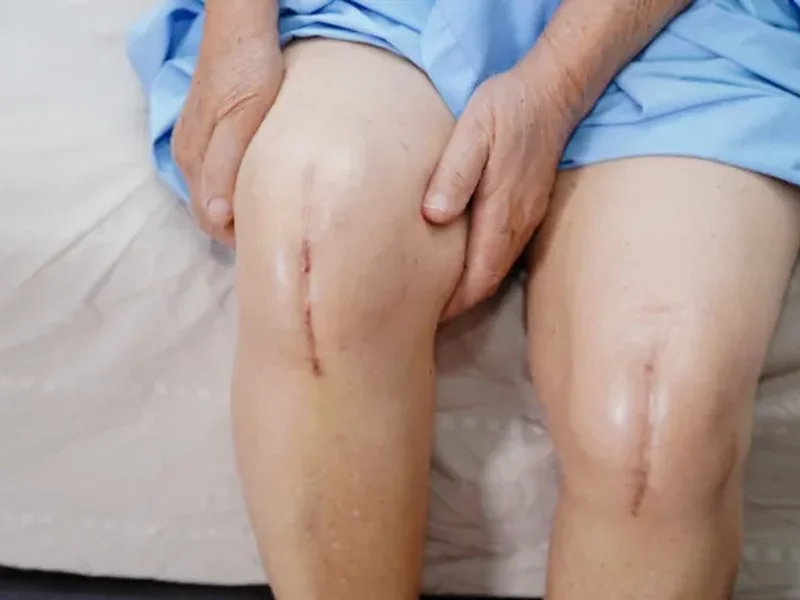
The Honest Truth
Nobody regrets starting their rehab early. Every week, someone in our clinic wishes they hadn't waited on their new knee.
How We Fix It
Every plan has an endpoint. Here's what the four phases look like after knee replacement.
Weeks 1–2
Pain
Hands-on techniques and gentle movement bring down post-surgical swelling and start waking your quad back up, starting your very first visit.
Weeks 2–6
Prime
Targeted mobility work breaks up scar tissue and restores the bend and straighten your surgeon is expecting to see.
Weeks 6–10
Perform
Progressive strengthening gets your quad and hip firing again, so the knee can actually hold you up on stairs and uneven ground.
Weeks 10+
Prevent
Stairs, uneven ground, and the activities you had surgery to get back to all get tested for real before you're cleared: that's the endpoint, not just another appointment.
I had a great experience during my appointments with Dr. Pepper! He was very knowledgeable and detailed in evaluating my situation after my knee surgeries. Dr. Pepper is also very friendly and kind and showed a sincere desire to help me with my recovery. You can't go wrong making an appointment with Dr. Pepper if you need some physical therapy!
Dorenda M. · Knee Replacement Surgery
Before: bracing for a detailed look at what her knee surgeries had actually left her with
After: a detailed evaluation and a recovery plan she trusted enough to recommend
Questions, Answered
No. Your surgeon already has the imaging that matters. What we need is a hands-on look at how your knee is actually bending, straightening, and bearing weight right now, which no X-ray shows. That evaluation happens at visit one, and it's what your whole plan gets built around.
In most cases, yes, some discomfort with movement is a normal part of regaining motion after surgery. Sitting still too long lets scar tissue tighten further. The key is knowing how hard to push and when to back off, which is exactly what a Doctor of PT manages at every visit as you progress.
Most patients see meaningful change in range of motion and strength within the first 4–6 visits. A full plan runs through all four phases, Pain, Prime, Perform, and Prevent, typically over 8–10 weeks, depending on how your surgery and healing have gone. Either way, you get a plan with an endpoint: you'll always know which phase you're in and what's left.
Book Your Visit
Request a time and a real person calls you back, usually within two business hours. No phone tree. No ‘someone will reach out.’ Just a plan.
5.0 · 250+ Google reviews
Typical response: under 2 business hours
Step 1 of 5
That’s the hard part done. We’ll call during business hours to lock in your time. Most people are on the schedule same week.
Visit Us